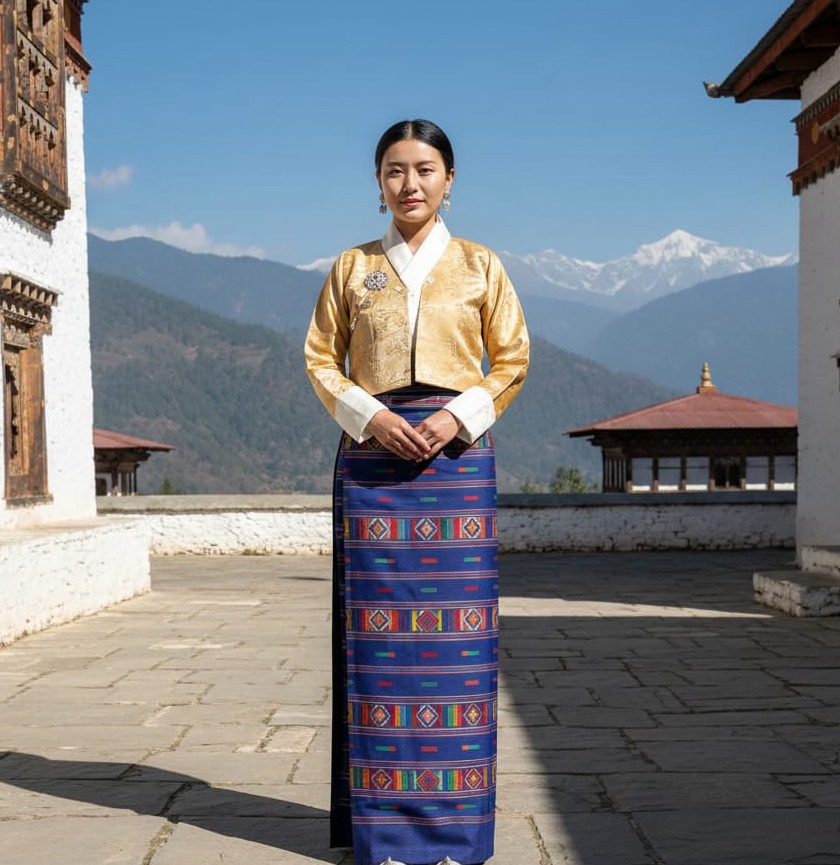
The Kira is the national dress for women in Bhutan. It consists of an ankle-length dress made of bright, woven textiles, wrapped around the body and secured at the shoulders with silver brooches called Koma.
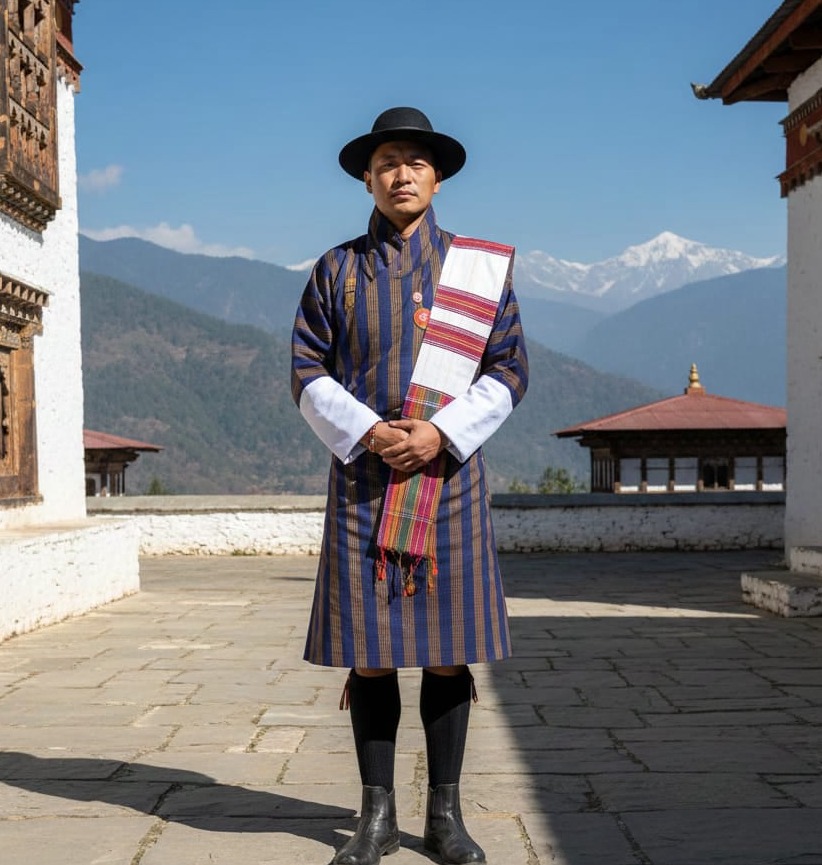
The Gho is the traditional dress for men. It is a knee-length robe tied at the waist by a cloth belt known as the Kera. It forms a large pouch above the belt, which traditionally served as a pocket for carrying items.
- Kuzu → body
- Zangpo → good or well
- La → honorific particle
- Usage: Spoken when meeting someone. It conveys a wish for the person’s well-being.
- Tashi → auspiciousness
- Delek → well-being or blessings
- Usage: Expresses goodwill and prosperity—like saying “May all good things come to you.”
- Kadrinchey → gratitude or thanks
- La → honorific particle
- Usage: Used to express appreciation. Adding La makes it more polite and respectful.
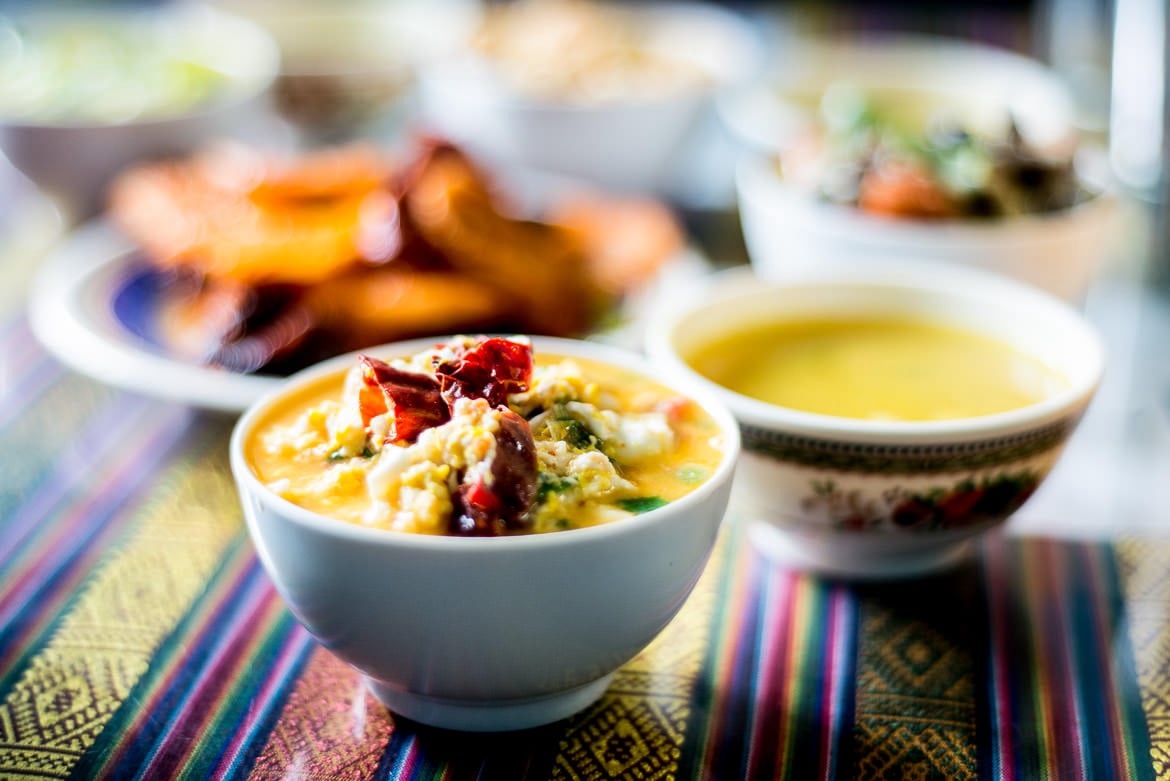
National dish made of chilies and cheese, spicy and comforting.
Potatoes cooked with cheese and chilies, hearty and mild.
Mushrooms simmered with cheese and spices, earthy and rich.

Respect and honor are the heart of Bhutanese culture. Bhutanese people emphasize kindness, humility, and reverence for others.
“Don’t litter” is a reflection of respect for nature. Clean surroundings are seen as part of spiritual well-being.
The Kings of Bhutan are symbols of unity. Out of respect, people avoid speaking negatively about them.